The more recent part of the Horowitz genealogy is considerably better documented than the very early traditions described in The Origin.
The family tradition places the beginning of this more clearly traceable line in Hořovice (Horowice), Bohemia, around 1450. From there, members of the family moved to Prague and, later, into Poland. Over the following centuries, the Horowitz name became associated with a large rabbinical family whose members served Jewish communities throughout Poland and other parts of Central and Eastern Europe.
1 R. Yeshayah Halevi Horovitz, c. 1450 Horowitz – 1517 Prague
The founder of the family is considered to be Rabbi Yeshayah Halevi Horowitz who was born in Horowitz, son of Rabbi Moshe Halevi and grandson of Rabbi Yosef Halevi. He was a rich man.
In the early 16th century, when the Jewish community in Prague expanded and the land rights reform of 1501 allowed Jews to acquire more property in the city, the Horowitz family sold their holdings in Horowitz and moved to Prague. They adopted the Horowitz surname
R. Yeshayah was a prominent and respected member of the Prague Jewish community. He died in 1517. R. Yeshayah’s wife, Rivka Horowitz-Munka (Heller Wallerstein), died on 2 June 1515. Her grave still exist on the Jewish cemetery in Prague.
Yeshayah Halevi Horowitz had seven sons, all born and died in the Jewish Ghetto of Prague. Two of them became known in Israel’s history as rabbis and philanthropists – Rabbi Aharon Meshulam Zalman Horowitz and Rabbi Shabtai ‘Sheftel’ Horowitz. Many who bear the last name Horowitz add the box “ISH” in Hebrew initials of Aharon,Yeshayah, and Shabtai, the ancestors of the family.
2 R. Aharon Meshulam Zalman ish Horovitz, 1470 – 16 Aug 1550 Prague
R. Aharon Meshulam not only inherited his father’s wealth, but multiplied it. He was a successful merchant and money-lender.
In 1534 in Prague, he was falsely accused of treason. He took an oath to build a synagogue if he was freed. This happened and he started building the famous Pinkas Shul synagogue in Prague called so in the name of his brother Pinchas who completed its construction. The synagogue was used by worshipers in Prague for hundreds of years.
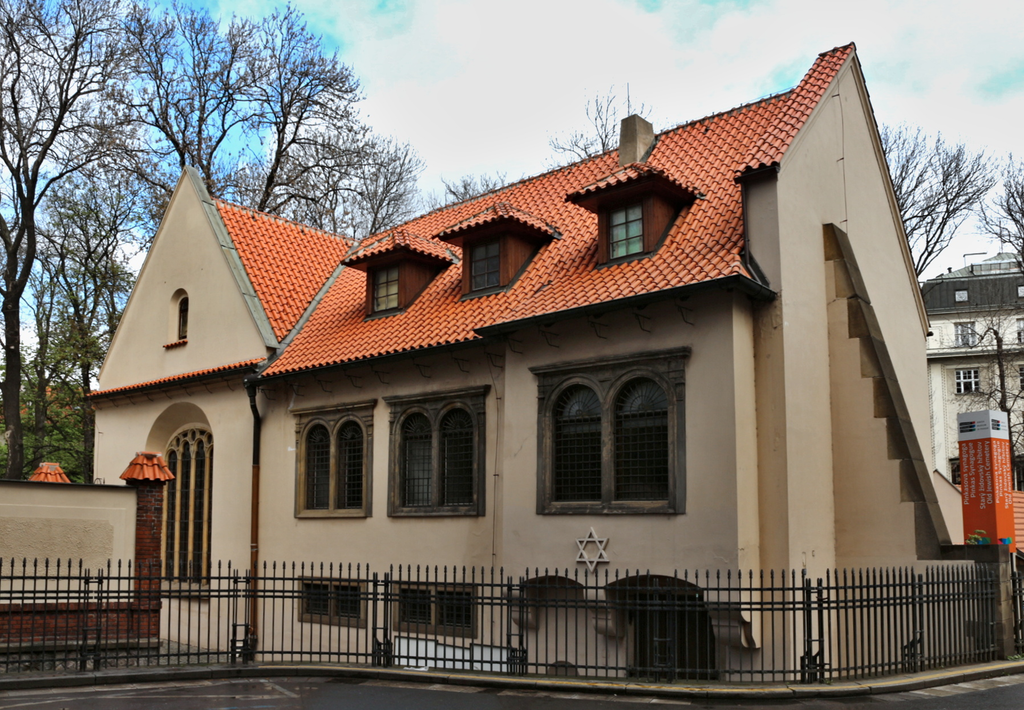
Pinkas Synagogue
In 1541, King Ferdinand I of Habsburg ordered the expulsion of the Jews from the kingdom. However, in 1542, R. Aharon Meshulam successfully persuaded King Ferdinand to revoke the expulsion. He worked hard on the King to protect Prague’s Jews, letting them stay in the Jewish Quarter.
R. Aharon Meshulam married twice. His first wife, Esther died in 1496. With his second wife, Nechama bat Menachem Horowitz (Munk) (1486-1536) he had at least 4 children, including ancestor Israel Jacob Munka Horowitz.
R. Aharon Meshulam died on 16 August 1545 and was buried in Prague.
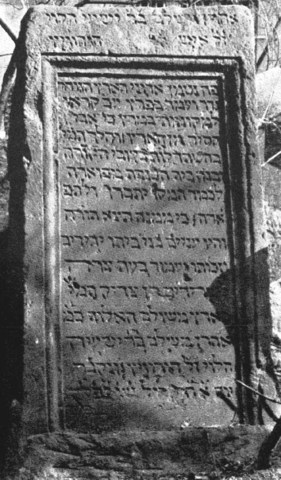
Tombstone: Aharon Meshulam son of R’ Yeshaya Halevi Ish Horowitz
3 R. Israel Jacob Munka HaLevi Horowitz, Prague – 21 Sep 1572 Prague
R. Israel (Munk) Halevi ISH Horowitz was praised for his philanthropy. He was married to Nissel Reisel (Rachel?) Ursula Horowitz (Ashkenazi- Stern). They had 15 children.
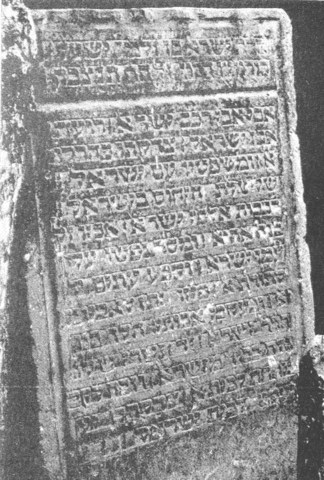
September 21, 1572. Rabbi Israel Jacob ‘Munka’ son of Aaron Meshulam ‘Zalman’ Halevi ISH‐Horowitz. Grandson to Isaiah. Prague Ancient Jewish Cemetery
4 GM Rabbi Pinchas Halevi Horowitz 1535 Praag – 1618 Krakow
R. Pinkhas ben Israel and his uncle R. Avraham ben Shabtai, a son of R. Shabtai Sheftel, moved to Poland and marked the beginning of the family’s expansion outside Prague. Within a few decades the name Horowitz became widespread all over the Austro-Hungarian Empire.
Within a century or two, members of the Levite Horowitz rabbinical family had moved to Poland, Lithuania, Russia, Belarus, Ukraine, and throughout the Austro-Hungarian Empire, serving as rabbis in, inter alia, Prague, Cracow, Vienna, Hamburg, Nikolsberg, Tikosyn, and Brody.
Rabbi Pinchas Halevi Horowitz was an important scholar of the Talmud. He married in Krakau to Miriam Beila Horowitz (Isserles), the sister of Rabbi Moses Isserles, the Rema, a famous Rabbi in Krakow.
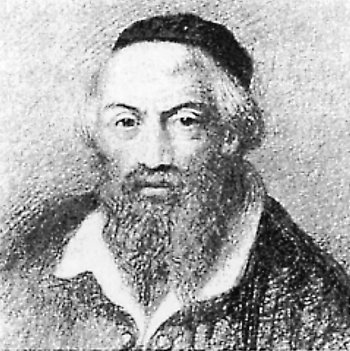
Rabbi Moses Isserles, the Rema, brother in law of Rabbi Pinchas Halevi Horowitz
Rabbi Pinchas’ father in law, Israel ben Josef (known as Isserl), was a prominent talmudist and independently wealthy, who had probably headed the community
From 1581 Rabbi Pinchas HaLevi Horowitz followed his father in law, for many years, as the head of the Jewish community of Krakow,
From 1585 he served as the head of the Council of Four Lands, which was an important institution responsible for governing Jewish communities in Poland and Lithuania. The council addressed various communal matters, including taxation, legal disputes, and communal welfare.
With his wife Miriam Beila Horowitz (Isserles) they had 10 children. She died 8 september 1617 and was buried next to her brother, the Rema.
He died, at the age of 83 years, on March 1st, 1618.
5 Yehoshua “HaAruch” HaLevi Horowitz, 1565 Kraków -1628 Przemyśl
HaGaon Moreinu (Our Teacher) Rabbi Yehoshua HaAruch (the tall) Horowitz was Rabbi of Przemysl, in Poland, near the Ukraine border. He was Head of the Rabbinical Court.
Yehoshua “HaAruch” married Fraidchy Stengen (Shmelkes), daughter of Rabbi Yehoshua Shmelkes, of Premysl and was maybe also married to her sister.
Yehoshua “HaAruch” HaLevi Horowitz had at least 7 children. He died in 1628 in Przemyśl.
6 GM Shmuel halevi Horowitz, 1615 Krakow -19 augustus 1696 Tarnow
Rabbi Shmuel Halevi Horowitz, a respected rabbi or Torah scholar. He married Sarah Babab, daughter of Rabbi Moshe Charif, Rabbi of the Rabbinical Court in Krakow
R. Shmuel Halevi Horowitz moved to Tarnów, between Przemysl and Krakow, Poland. He was head of the rabbinical court (Beit Din) of the towns of Tarnów and Sędziszów Małopolski.
They said about him that he had the soul of Rabbi Pinchas ben Yair, who was renowned for his righteousness, wisdom, and spiritual depth.
R Shmuel Shmelke Halevi Horowitz was the father of 5 children. He died in 1696 in Tarnow.
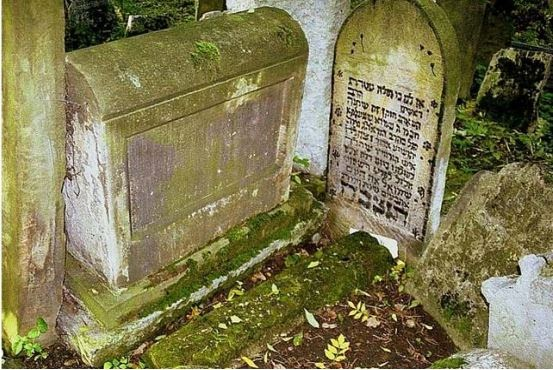
Tomb of Shmuel Shmelke Segal Ish Horowicz, Jewish Cemetery of Tarnow, Poland
“Woe to us, we have lost the crown over our head, our beloved elder Rabbi who acquired wisdom, Shmuel Shmelke Segal [staff of Levites], son of the great light Rabbi Yehoshua the tall Halevi Ish-Horowicz, blessed be the memory of the Tzadik, went to a better world on Wednesday, The 1st of the month of Elul [19 August]. Shmuel may he rest in peace, today 40 days after his death the year of 1696.
May His Soul Rest With The Living”
7 Rabbi Meir Halevi Horowitz 1656 Tarnow – 13 May 1746 Tykocin
Rabbi Meir Halevi Horowitz, was known as MaHaRam of Tiktin. Tiktin (nowadays Tykocin) is a town in the north east of Poland, near Belarus)
He was Av Beit Din (head of the rabbinical court) of Oheilev and Zloczew and in 1718 became ABD Tykocin
He became known as MaHaRam of Tiktin, The title “Maharam” is an acronym for “Moreinu HaRav Rabbi Meir,” which means “Our Teacher Rabbi Meir.” It is a sign of respect given to esteemed rabbis.
He first married Leah Katz (1630-1713), daughter of Menachem Meinish Katz. They had 10 children, including ancestor Rabbi Yeshua Horowitz.
His second wife was Matil, daughter of R. Ephraim Zalman Katzenellenbogen with whom he had three children.
In his old age, the Rabbi heard of a plan to pay him honor at a family celebration of his birthday. Those involved were twelve distinguished Rabbis, his grandsons, and he put a halt to these plans saying: “From the children whom the Lord has given me, I expect delight in the world-to-come and not in this world.”1
8 Rabbi Yeshua Horowitz, died 17 december 1795 Zhovkva, Lviv
R. Yehoshua HaLevi Horowitz was head of the rabbinical court of Jaroslaw (near Przemyśl Poland, border Ukraine) and of Busk, 50 km east of Lviv in Ukraine.
He had at least 6 children.
He died on 17 December 1795 in Zhovkva, 30 km north of Lviv.
9 Rabbi Yaakov Chaim Horowitz, died Koniecpol 1780
Rabbi Yaakov Chaim was head of the rabbinical court of Koniecpol, also known as Nowopole, This was a private town, 90 km north of Krakow, in Poland. It was the seat of the Koniecpolski magnate family.
R. Yaakov Chaim Horowitz married a daughter of Rabbi Nachum, the leader of the town of Lask, 20 from Koniecpol. They had at least 4 children.
Rabbi Yaakov Chaim Horowitz died around 1780 in Koniecpol.
Hasidism in Poland
Hasidism is a religious movement that arose in Poland during the 18th century, and spread rapidly throughout Eastern Europe.
Hasidism is noted for its religious conservatism and social seclusion. Its members adhere closely both to Orthodox Jewish practice – with the movement’s own unique emphases – and the traditions of Eastern European Jews. Many of the latter, including various special styles of dress and the use of the Yiddish language, are nowadays associated almost exclusively with Hasidism.
The adherents of Hasidism, are organized in independent sects known as “courts” or dynasties, each headed by its own hereditary male leader, a Rebbe. Today, most of those affiliated with the movement live in Israel and in the United States.
Israel Ben Eliezer, the “Baal Shem Tov” (1698-1760), or as the BeShT, was a Jewish mystic and healer who is regarded as the founder of Hasidism. “Besht” is the acronym for Baal Shem Tov, which means “Master of the Good Name,” a term for a holy man who wields the secret name of God. His successor to lead the early movement was Dov Ber ben Avraham of Mezeritch (died 1772), also known as the Maggid of Mezeritch.
One of his leading disciples, Shmuel Shmelke HaLevi Horowitz of Nikolsburg 1726–1778 is amongst the most important figures to early Polish Hasidism. He was a grandson of generation 7, Rabbi Meir Halevi Horowitz and a cousin of generation 9, Rabbi Yaakov Chaim Horowitz. In 1754, Reb Shmelke was appointed the Chief Rabbi of Rychwal. He held this position for some time, during which several young Hassidim came to study with him from surrounding areas, the most notable of which being Yaakov Yitzchak of Lublin, Levi Yitzchok of Berditchev and Yisroel Hopstein.
These three men were the hasidic leaders in Poland They were the first to disseminate the teachings of the Baal Shem Tov in Poland and to found hasidic centers there. They are considered the fathers of Polish Hasidism. They were also of great importance for the Horowitz Engel family.
Yaakov Yitzchak HaLevi Horowitz known as “the Seer of Lublin” (c. 1745 – 1815] was a Hasidic rebbe from Poland. He became known as the “seer” or “visionary” due to his purported ability to gaze across great distances by supernatural means. He was related to the Horowitz-Engel family, probably a cousin or second cousin.
Yisroel Hopstein (1737–1814) also known as the Maggid of Kozhnitz (Kozienice), was the founder of Kozhnitz Hasidism. The Maggid was Yisrael Hopstein (ca. 1737, Opatov – 1814, Kozienice). He was short of stature and thin of body. Avraham Chaim Engil Horowitz, generation 12, was married to his niece.
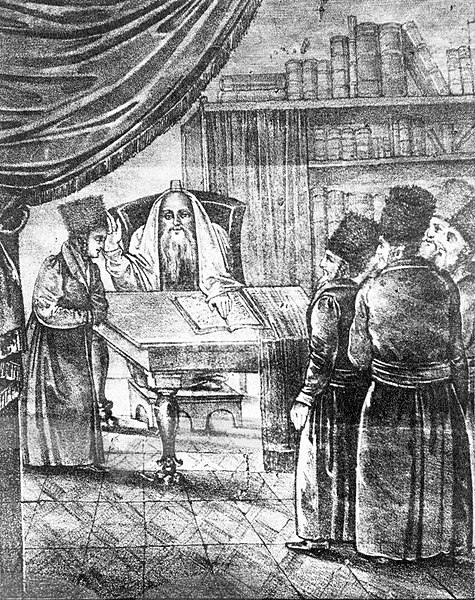
Maggid of Kozhnitz
Levi Yitzchok of Berditchev (Levi Yitzchok Derbarmdiger (compassionate in Yiddish) (1740–1809), also known as the holy Berdichever, and the Kedushas Levi, was a Hasidic master and Jewish leader. Levi Yitzchok was known as the “defense attorney” for the Jewish people (“Sneiguron Shel Yisroel”), because he would intercede on their behalf before God. Known for his compassion for every Jew, he was one of the most beloved leaders of Eastern European Jewry. He is considered by some to be the founder of Hasidism in central Poland. And known for his fiery service of God. He was a great friend of the family and helped in careers.
10 Rabbi Meir Horowitz DVASH Sheps, HaLevi Poland – 1806 Sierpc
He was also known as Rabbi Meir or Meirel Lasker, named after the city of Lask where he lived in his youth.
His brother, Rabbi Reuven Halevi Horowitz was a well known author and head of the court of Żarnowiec.
With the influence of Rabbi Levi Yitzchok of Berditchev and Rabbi Yisrael of Kozhnitz (the maggid), Yosef Meir was chosen as rabbi in Sheps, now called Sierpc, 250 km north of Koniecpol. From 1790 he was head of the rabbinical court of the region.
The name Dvash was derived from the initial letters of the three towns where he served as rabbi: Dobrzyń, Będzin and Sheps. Dvash is also the Hebrew word for “honey”.
However, he became famous mainly as the rabbi of Sheps because he is mentioned in books as “Rabbi Meir of Sheps” or “Meir Shepsir”. He also died in Sheps and was buried in the old cemetery. There is a “crypt” above the grave, and even in the 20th century, the townspeople would come to visit his grave, spill their troubles to the rabbi, and drop little notes into the crypt. The notes would ask for complete recovery from all kinds of diseases, prosperity, good luck, and so forth.
Rabbi Meir Dvash was both a Rabbi and a Rebbe [leader of a Hasidic sect]. He had both followers that would travel to see him, and opponents who pursued him. Apparently, he had visions, so that his opponents called him “meshuggeh [crazy] scholar”. His followers called him “Baal Shem” [miracle worker] because of the deeds and visions that he related to his followers, and his farsightedness.
He was a friend of Rabbi Levi Yitzhak of Berdichev, who would come to Sheps to visit him.
Rabbi Meirel was considered a great and saintly rabbi. He died in 1806 and was buried in Sierpc.
The story of “The Slain Pursuer”
A Yiddish ballad, “The Slain Pursuer”, tells a dramatic story connected with Rabbi Meir Dvash and the Kedushas Levi.
The story describes an opponent who repeatedly caused difficulties for Rabbi Meir. When Meir went to visit Rabbi Levi Yitzchak of Berditchev, he told him about his suffering.
According to the ballad, the Kedushas Levi reacted with great emotion and uttered a curse against the person who was persecuting Meir. The story ends with the persecutor becoming unconscious and dying within a few hours.
The ballad is preserved in the Sierpc Yizkor material and was translated from Yiddish by Jerrold Landau.
11 Rabbi Yehudah Leibish Engel Horowitz 1766 – 28 Oct 1830, Kozeniece
The next generation brings us much closer to the Engel family.
Rabbi Yehuda Leibish Engel Horowitz, also known as Yehuda Leib Halevi Abdek Horvitz, was the son of Rabbi Meier and Fayga from Sierpc, Płock Voivodeship and belonged to the rabbinical tradition of Sheps.
He married Ruchla Moszków Leybusiowicz, daughter of Rabbi Yosef Leib of Ostrowiec.
The family source Honor of Jerusalem describes him as a great scholar and a hidden righteous man and records stories about his piety and character.
Importantly, his death is documented by a Kozienice civil death certificate 66, dated 28 October 1830.
The document states that Leybuś Maierowicz Horowitz died on 28 October 1830 at the age of 64. He was the son of Maier and Fayga from Sierpc, Płock Voivodeship, and was living in house number 197 in Kozienice.
He left his widow Ruchla and five children:
Sons
- Abram
- Moszk
- Nastula
Daughters
- Frayzla
- Rywka
The death certificate therefore provides an important piece of primary documentary evidence for this branch of the family.
12 Avraham Chaim Engil Horowitz 1800/3 Kuznitz – 17 jan 1843 Kuznitz
Rabbi Avraham Chaim Engil Horowitz was married to Gittel Hofstein.
According to Honor of Jerusalem, Avraham Chaim was a great and holy scholar. After his mother’s death, he was raised by his grandfather, Rabbi Yosef Meir Halevi, known as Rabbi Meirl Shapser.
The family account describes him as a prodigy who, at the age of ten, already possessed an exceptional knowledge of Torah and deep analytical ability.
When his grandfather travelled to the Maggid of Kozienice, he took the young Avraham Chaim with him. The Maggid was impressed by the boy and eventually arranged his marriage to Gittel, the daughter of his brother Rabbi Aharon, whom he had raised as an orphan.
The Maggid is said to have remarked:
“If he lives a long life, he will illuminate the world with his Torah and righteousness.”
Avraham Chaim, however, died at a young age in 1843.
← Previous: The Origin | Next: Israel Engel →
- “Unbroken Chain” by Neil Rosenstein page 967 ↩︎